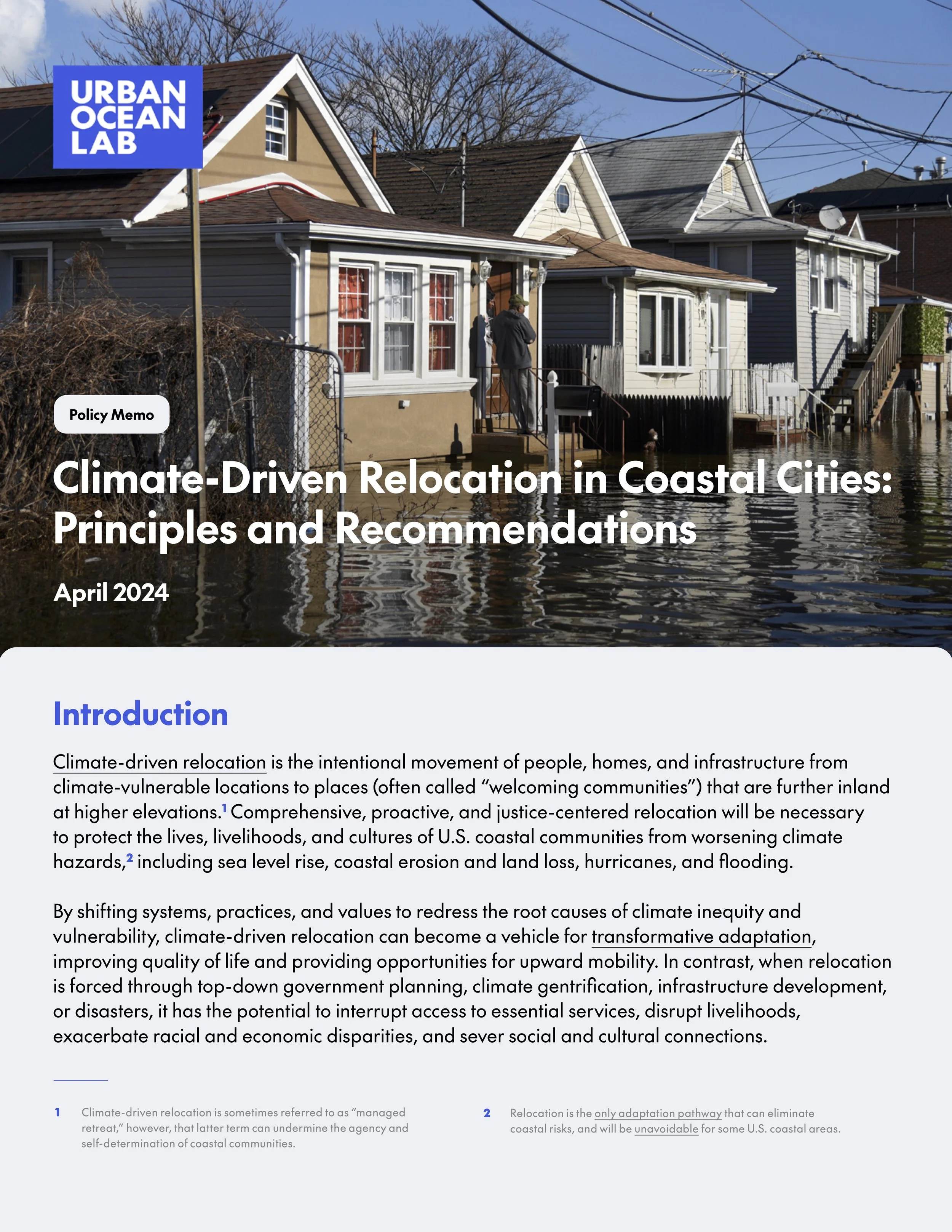
Climate-Driven Relocation for Coastal Cities: Principles and Recommendations
Climate-driven relocation is the intentional movement of people, homes, and infrastructure from climate-vulnerable locations to places (often called “welcoming communities”) that are further inland at higher elevations. Comprehensive, proactive, and justice-centered relocation will be necessary to protect the lives, livelihoods, and cultures of U.S. coastal communities from worsening climate hazards, including sea level rise, coastal erosion and land loss, hurricanes, and flooding.
By shifting systems, practices, and values to redress the root causes of climate inequity and vulnerability, climate-driven relocation can become a vehicle for transformative adaptation, improving quality of life and providing opportunities for upward mobility. In contrast, when relocation is forced through top-down government planning, climate gentrification, infrastructure development, or disasters, it has the potential to interrupt access to essential services, disrupt livelihoods, exacerbate racial and economic disparities, and sever social and cultural connections.
A one-page summary containing key takeaways from this document is also available.