
Case Studies to Advance Regenerative Ocean Farming
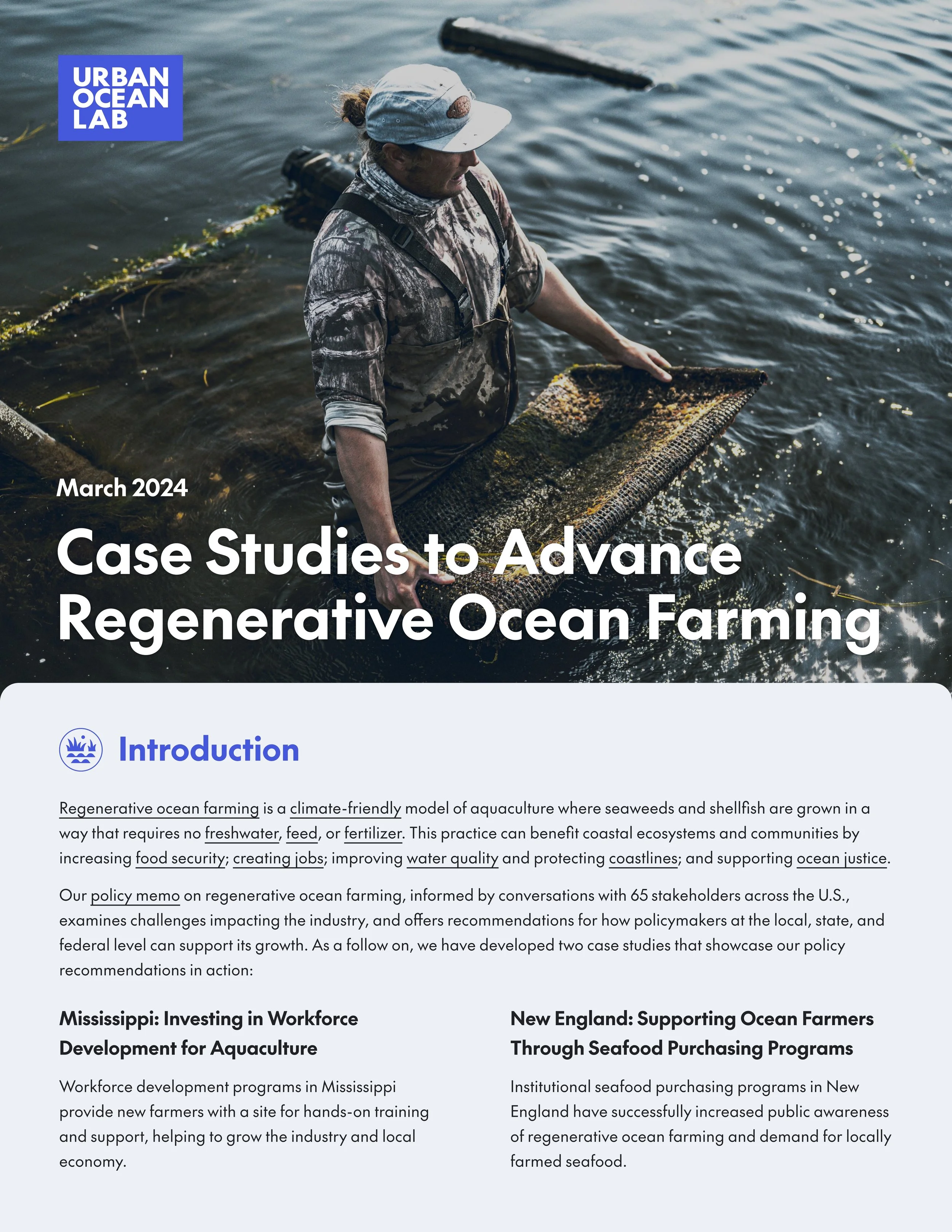
Regenerative ocean farming is a climate-friendly model of aquaculture where seaweeds and shellfish are grown in a way that requires no freshwater, feed, or fertilizer. This practice can benefit coastal ecosystems and communities by increasing food security; creating jobs; improving water quality and protecting coastlines; and supporting ocean justice.
Our policy memo on regenerative ocean farming, informed by conversations with 65 stakeholders across the U.S., examines challenges impacting the industry, and offers recommendations for how policymakers at the local, state, and federal level can support its growth. As a follow on, we have developed two case studies that showcase our policy recommendations in action:
-
Workforce development programs in Mississippi provide new farmers with a site for hands-on training and support, helping to grow the industry and local economy.
-
Institutional seafood purchasing programs in New England have successfully increased public awareness of regenerative ocean farming and demand for locally farmed seafood.
