


Reflecting on a year of ocean-climate action
Winter 2022
Welcome to the 2nd issue of UOL Quarterly. With 2022 coming to a close, we’ve been reflecting on an exciting time of growth for Urban Ocean Lab. This year, we built our team, co-created a consensus-based Ocean Justice Platform, published a foundational report on coastal city population demographics and climate risks–and more.
This year also highlighted why our mission to cultivate rigorous, creative, equitable, and practical climate and ocean policy solutions for coastal cities is so critical:
The announcement of the first-ever, whole-of-government Ocean-Climate Action Plan sets the stage for coastal cities to help catalyze transformative ocean-climate action.
The Inflation Reduction Act’s historic climate provisions include billions of dollars in investments for coastal resilience and environmental justice, creating an unprecedented opportunity for cities.
The Supreme Court’s decision to limit the EPA’s ability to regulate greenhouse gas emissions underscores the need for cities and local governments to help fill a policy gap.
Coastal cities have an important role to play in advancing ocean-climate action. That’s why, next year, we’ll be hard at work developing a ‘Blue New Deal’ policy framework for coastal cities; deepening our policy work in areas like managed retreat and offshore renewable energy; and fostering a community of practice by connecting those working toward policy change in coastal cities.
Thank you for being a part of our community and rolling up your sleeves on climate solutions. And if you’d like to support UOL and our work:
WINTER FEATURE:
Social cohesion as a climate strategy
The 2022 hurricane season was one of the deadliest and most destructive on record. Currently, 20% of the U.S. population—one in five people—lives in coastal cities. As climate impacts increase and more people move to the coast, the need for more comprehensive climate solutions is critical.
For the 10-year anniversary of Superstorm Sandy, we partnered with the New York City Comptroller's Office on a new report that highlights the importance of communities and social networks for climate preparedness, and includes recommendations for how New York City (and other coastal places) can support community-led efforts, including:
Move from models of community engagement to collaborative governance.
Create dedicated flexible funding for community organizations to implement resiliency solutions.
Establish on-call emergency contracts for community organizations to institutionalize their role in climate disaster preparedness and response.
Develop a comprehensive community organization training program for climate preparedness and resiliency.
Invest in the resilience of community organizations’ physical spaces, establishing them as “Community Resilience Hubs.”
UOL PROGRESS REPORT:
Exploring regenerative ocean farming as a climate solution
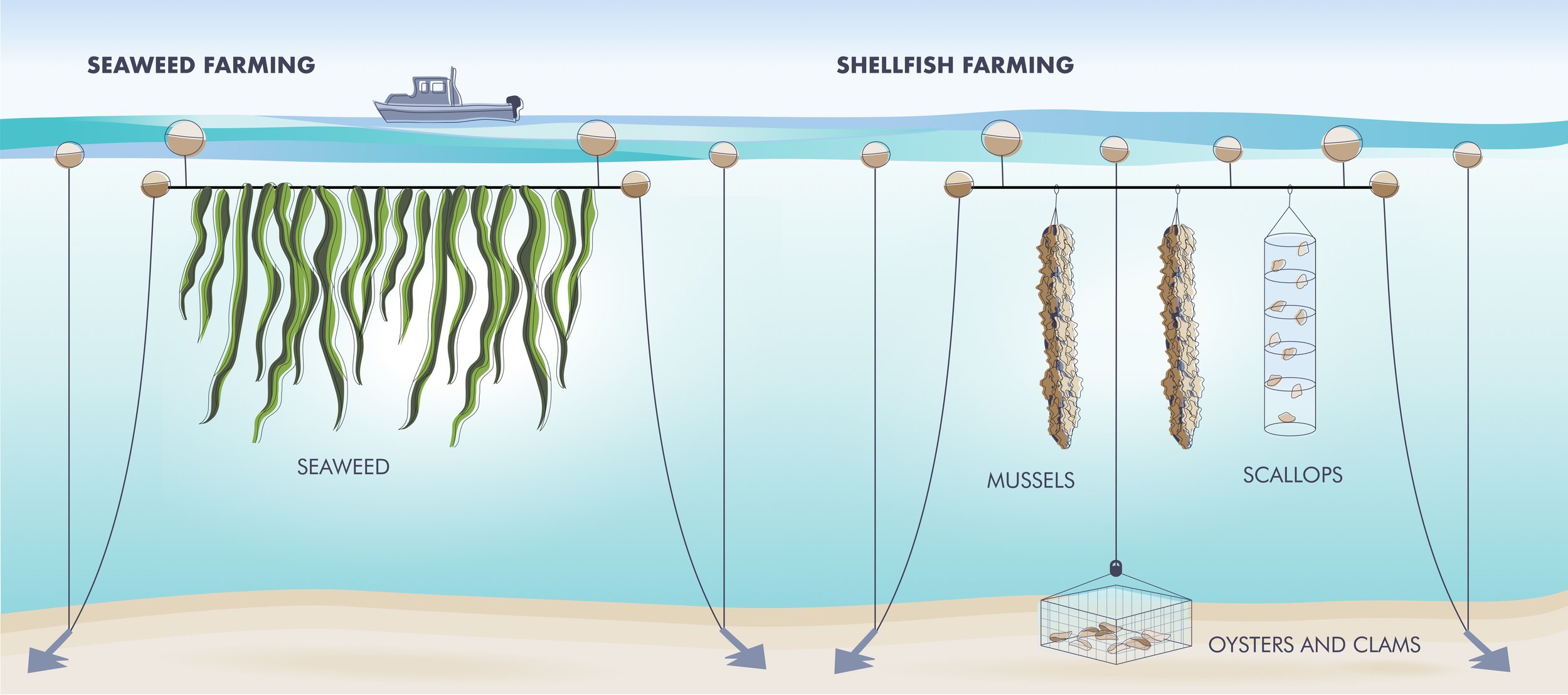
As coastal city policymakers work to strengthen coastal economies, revitalize working waterfronts, and prepare for climate impacts, regenerative ocean farming can offer solutions.
Regenerative ocean farming is a climate-friendly form of aquaculture where seaweeds and/or shellfish are grown in a way that requires no freshwater, feed, or fertilizer. This farming model has the potential to create millions of new jobs, while protecting coastlines, improving water quality, and increasing access to nutritional food.
We’re launching a new series, including recommendations for how policymakers can sustainably grow the industry. First is a new factsheet explaining what, exactly, regenerative ocean farming is and how it can provide climate solutions.
WHAT’S WORKING
Oyster-tecture
New York City’s waters were once home to thousands of acres of oyster reefs, but overharvesting and pollution nearly decimated their populations. The last decade has brought renewed interest in the role oysters can play in coastal ecosystems, as well as their potential to act as a nature-based climate solution: Oyster reefs offer natural shoreline protection, prevent storm surge and erosion, reduce sewer overflow, and more.
Oyster-tecture, pioneered by SCAPE Studio (led by UOL advisor Kate Orff), proposes using artificial living oyster reefs to improve coastal resiliency and water quality in the New York Harbor, and has helped inform successful interventions like Living Breakwaters. Read more about how oysters are being used to increase coastal resilience here and here.
WORTHWHILE READS
After COP27, a Plea–and a Pathway–for Urgent Corporate Action (Atmos, authored by UOL co-founder Ayana Elizabeth Johnson)
To Save America's Coasts, Don't Always Rebuild Them (New York Times)
Flood. Retreat. Repeat. (Grist)
How to Fix Americans’ Diminishing Access to the Coasts (Center for American Progress)
In a First, U.S. Pays Tribes to Move Away From Climate Threats (New York Times)
Deem Issue Four, “A Sense of Place” (Featuring an interview by UOL co-founder Marquise Stillwell)
Memo: A Just Disaster Response (Climate and Community Project)
TEAM BULLETIN
Bowdoin Roux Center for the Environment
Bowdoin College has appointed Ayana as their inaugural Roux Distinguished Scholar. She will start teaching in fall 2023.
Jean Flemma quoted in the New Yorker and Grist
UOL co-founder Jean Flemma was quoted in a New Yorker piece on the future of barrier islands, and in Grist about the EPA’s new environmental justice office. Read the articles here and here.
Op-ed from the Ocean Justice Forum
The Ocean Justice Forum steering committee published an op-ed on how ocean justice can empower communities of color on the frontlines of the climate crisis. Read it here.
ASLA 2022 Conference on Landscape Architecture
Ayana joined UOL advisor Kate Orff for a discussion on how landscape architects can center ocean justice and accelerate climate action.
Urban Ocean Lab cultivates rigorous, creative, equitable, and practical climate and ocean policy for the future of coastal cities. To support our work: spread the word by forwarding this newsletter and consider making a tax deductible donation.